

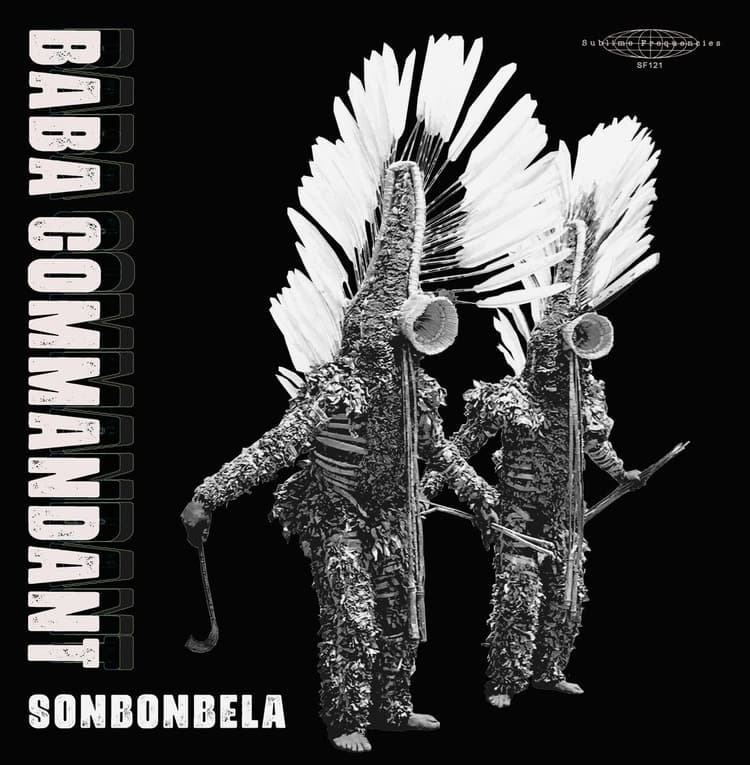
Baba Commandant and the Mandingo Band
Sonbonbela
Sublime Frequencies · 2022
 Wassily Minkow
Peoples Mande, to which the Bambara, Malinke and Soninke belong, consider themselves descendants of Sundiata Keita, the legendary founder of the Mali Empire, which existed from the 13th to the 17th century. At its peak, Mali was one of the largest empires in West Africa, and it had a significant influence on the entire region: the spread of Mande languages with various dialects is observed in Mali and neighboring countries, including Burkina Faso, Ivory Coast, Guinea-Bissau, Guinea, Senegal, and Gambia.
Popular and folklore music of the Mande people has also influenced West African culture. The group Baba Commandant and the Mandingo Band from the city of Bobo-Dioulasso,, the second largest in Burkina Faso,, is a vivid representative of this musical tradition.
The group's leader, Baba Commandant, whose real name is Mamadu Sanu, began his career in 1981 as a dancer in the group Koule Dafourou. He then sang in the group Dounia, after which he became the vocalist and frontman of the Mandingo Band.
Currently, Baba Commandant continues to develop Mande music, particularly the Mandinka ethnicity, combining it with Afrobeat. He draws inspiration from the golden age of Nigerian music, such as the works of Fela Kuti and King Sunny Ade, as well as the music of Malian singer Moussa Doumbia. Baba plays the kamale n'goni - a small version of the traditional hunter's harp Donso, and his music is popular among various layers of Burkinabe society.
Sonbonbela is the group's third album, once again reflecting their commitment to authentic Afrobeat sound. The musicians have rejected modern trends: drum machines, digital synthesizers, and autotune. Instead, the group focuses on the live sound of Afrobeat, which will especially appeal to fans of Fela Kuti, Orchestre Poly-Rythmo de Cotonou, as well as enthusiasts of Afrobeat compilations Ghana Soundz and [Nigerian Special.
Translation powered by chatGPT*