

✏️ About vintage Armenian dance music
 Wassily Minkow
When I arrived in Armenia in 2022, I immediately set myself the goal of creating a playlist dedicated to vintage Armenian dance music — disco, funk, rhythm, and blues. But things didn’t go smoothly with this playlist right away. Armenians are among the top five nations in the Middle East in terms of the amount of funk and disco they’ve produced. But the mastodons I had heard before my trip to Armenia greatly distorted my perception and hindered me from expanding the list.
Back in 2019, I heard the reissued record of Hamlet Minasyan by Numero Group, recorded in Iran in 1979 on the eve of the Iranian Revolution. For an entire month after that, I started and ended my day listening to "Alas-Alas." That song seemed to me like music for a nonexistent Parajanov-like parable filled with anachronisms from the 80s. Remember in "Ashik Kerib" when the women from the Shah's harem suddenly pull out machine guns and start shooting in the air? Well, it seemed to me that in this nonexistent film, for example, Jason, on his way to the Golden Fleece, might detour to an ancient Armenian kingdom and in the Temple of Mithra, instead of a statue of the sun deity, he would meet Hamlet Minasyan.
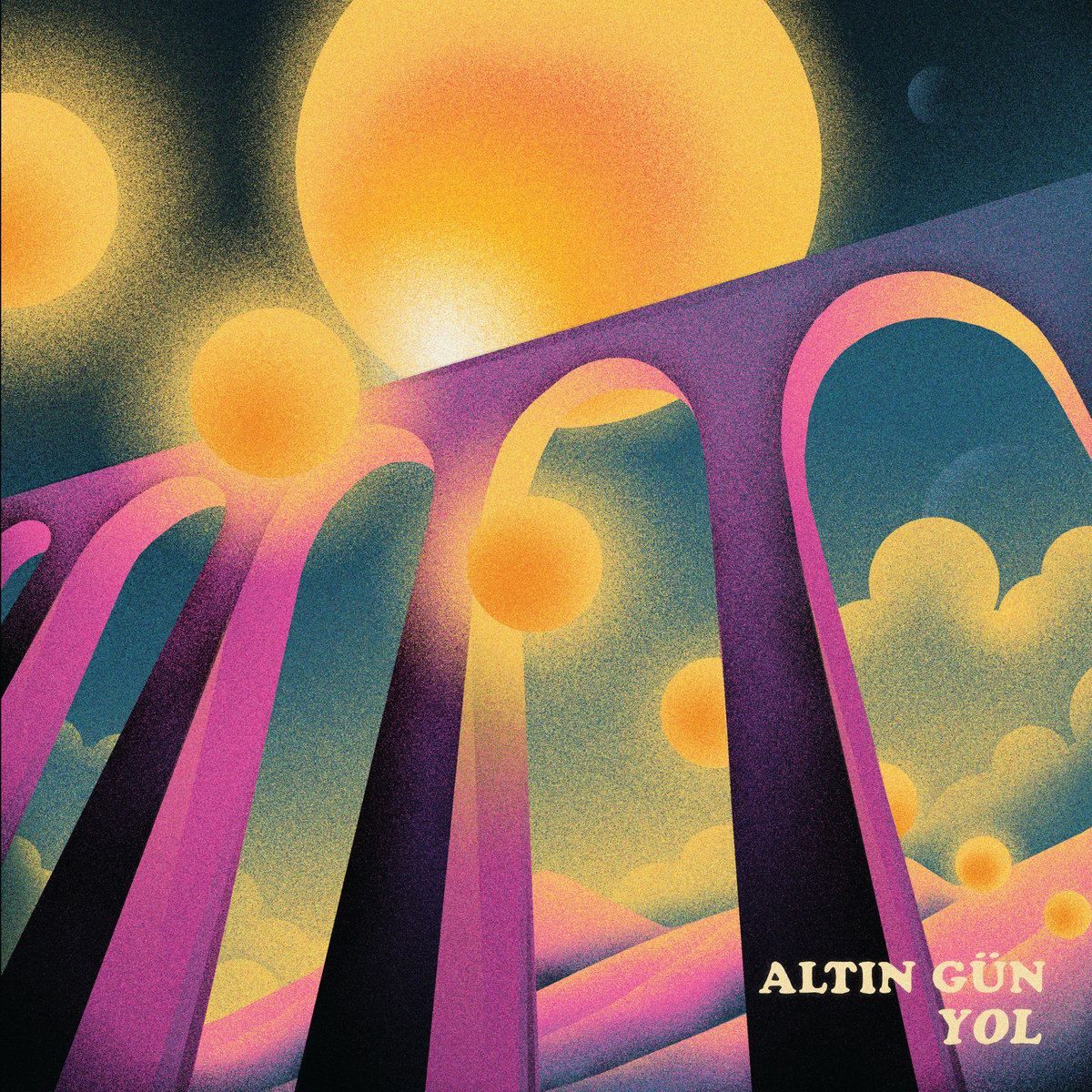
In 2021, when Karen (the author of this website) and I were at my house listening to the new Altin Gün album, he told me about Harut Pambukchyan. In Karen’s family, his music was always played at gatherings and celebrations. It seemed to me that Harut resembled Altin Gün more than any of the Turkish predecessors. Once again, an Armenian artist stuck in my player for a long time, and Karen and I even decided to try to do something like Altin Gün but in an Armenian style: reworking classic 70s pop songs with funkier and groovier arrangements.
Later that same year, Daron Sassounian released an absolutely brilliant compilation *Silk Road: Journey of The Armenian Diaspora*. Daron spent several years collecting rare Armenian records and compiled the best tracks from 1971 to 1982. The dance potential seemed modest to me, and I hadn’t played the tracks from it anywhere until I reached Armenia, but I still listened with great pleasure.
So, when I arrived in Armenia, I was confident that I’d find no fewer hits at the local record markets. There was indeed plenty of interesting music, but a few surprises awaited me.
First of all, disco and its electronic offspring like house and techno are not universally perceived as dance music. Even in modern, Americanized urban cultures, rock 'n' roll or salsa are much more popular on the dance floor — so what can we say about places where folk music reigns supreme? Armenians are very patriotic listeners. No matter how many times I played Armenian disco at parties in Armenia, it only resonated with true aficionados. However, folk rhythms in a 10/8 time signature were always a hit. Whether performed by a folk ensemble, Harut Pambukchyan, the legendary singer Boka, or his grandson, the popular singer Zhoka, these rhythms always worked. This is why Armenian disco is exotic, even for Armenians themselves. Not much of it was ever made.
Secondly, Soviet disco, rhythm and blues, and funk suffered greatly due to the recording traditions of the time. Petya Chinawat, co-founder of the vinyl store DiG, once recalled a colleague from the Melodiya record company who used to visit his shop and share stories. One was about how, during the Cold War in the 80s, a KGB agent would occasionally show up at the Melodiya studio and tell them to turn down the bass, supposedly because it sounded too American. Disco and funk, which are heavily tied to African percussion and bass guitar, suffered greatly from such low-frequency discrimination. One of the most striking examples of state security intervention, in my opinion, is Aram Satyan's record *Songs*. There’s almost no bass on it. So, although the songs have incredible dance potential, you can’t really play them at a party.
Thirdly, the Armenian people are known for producing incredible musicians, true masters of their craft. Aram Khachaturyan, Arno Babajanyan, Tigran Hamasyan — these names need no introduction. It’s absolutely clear that Armenia has a strong musical school. But after reaching such icy heights of technical and compositional mastery, it’s hard to descend and make music of simple pleasures, like funk or disco that stirs the blood and body. I can't explain otherwise why Armenian disco tracks have such complex melodic solutions that completely distract from dancing. Listen, for example, to "Siro Gisher" or "Tavih" performed by Raisa Mkrtchyan.
Fourth, a melancholic tone pervades many Armenian songs. It’s unclear where it came from in such a sunny land. Perhaps it was inspired by Russian melancholy, which came from the north. Or maybe it’s inherent in the traditions of many cultures connected with Persia. Listen, for example, to "Sazo Avaz" performed by Iranian singer Mohammad Reza Shahidjanyan:
Then listen to "Songs of Nostalgia" by the Kurdish singer Ali Akbar Moradi:
Then listen to "Imal Enim" performed by the Armenian folk ensemble "Shoghak."
Finally, listen to the song "Miayn Kez Hamar" performed by Ruben Matevosyan.
Both Iranians, Kurds, and Armenians have this piercing melancholic melisma in their music — the ornamentation of a melody where many notes are sung to one syllable. They have all been influenced by Persian musical culture for centuries. Perhaps this is why this sorrowful style of singing, rooted in traditional music, penetrated into the fashionable dance music of the second half of the 20th century — funk and disco.
In general, Armenia opened up a huge world for me, both of authentically performed Western-style dance music and music grown from traditional roots. With great pleasure, I present to you a playlist born on this journey.