

Selene Saint-Aime
Potomitan
Komos · 2022
 Wassily Minkow
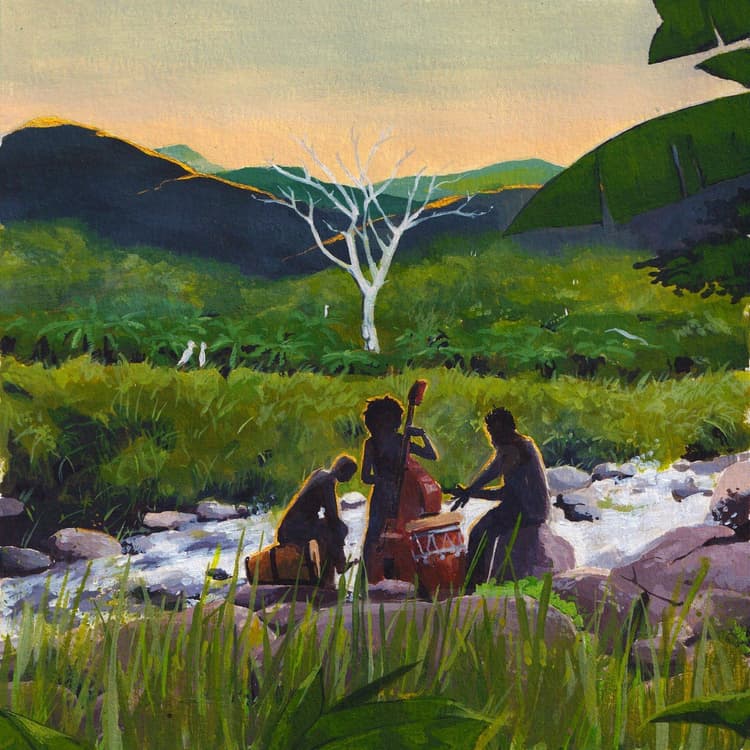
The second album of French double bassist Selena Saint-Eme Potomitan is inspired by her Caribbean heritage and her time spent during the pandemic in Martinique, a French island in the Caribbean Sea. The album's title, meaning the central pillar in Haitian Vodou temples, symbolizes the role of the mother in maintaining family stability. With this title, Selena apparently wanted to emphasize that in difficult times she finds support in her native culture.
The music of the album revolves around the double bass, Selena's vocals, and diverse percussion. In particular, throughout the album, the large drum "gwo ka" can be heard. In some tracks, you can hear cello, saxophone, and trombone.
The album opens with the song Arawak Uhuru, which means "freedom for the Arawaks" in Swahili. It is dedicated to one of the peoples of Martinique, who arrived on the island in the 1st century AD. Also on the album, you can find a cover of The Bird by Charlie Parker and a theme from the orchestral suite "Pelleas and Melisande" by Jean Sibelius, which are completely reimagined in such an unusual arrangement.
Translation powered by chatGPT